Shelf Goals: The American Collectors Turning Anime Figures Into Serious Art
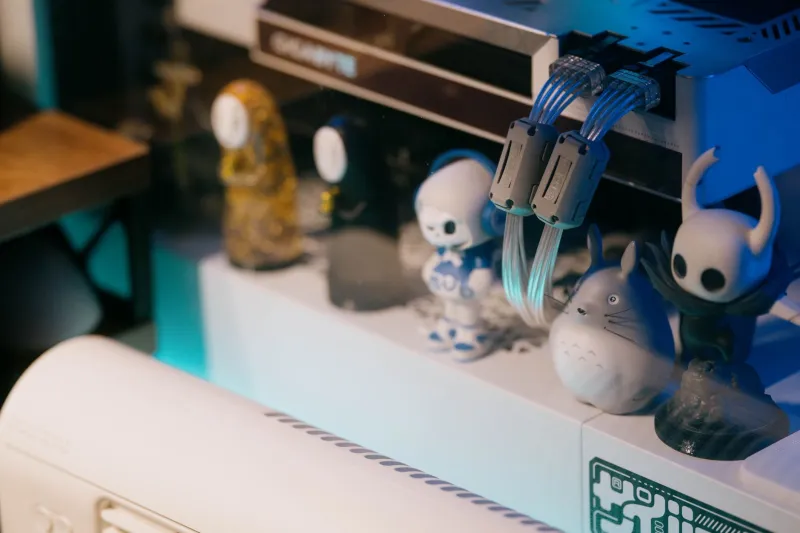
There's a particular kind of silence that falls over you when you walk into Marcus Chen's apartment in Austin, Texas. It's not the silence of emptiness — it's the silence of awe. Every wall is lined with backlit acrylic shelves. Every shelf holds figures: scale statues of Rem from Re:Zero, a pristine Makima from Chainsaw Man, a limited-run Asuka Langley that Marcus will quietly tell you he paid more for than his first car. "People think it's just toys," he says, adjusting a spotlight aimed at a 1/4 scale Nier: Automata piece. "But this is curation. This is preservation."
Marcus isn't alone. Across the US, a growing wave of collectors is transforming what was once a niche fan pursuit into something that looks a lot more like serious art collecting — complete with authentication rituals, climate-controlled storage, and secondary market strategies that would make a Wall Street trader nod in approval.
From Fan Merch to Fine Art
The shift didn't happen overnight. For years, anime figures occupied a specific cultural corner: something you bought at a convention, displayed proudly on a college dorm shelf, and maybe explained awkwardly to your parents at Thanksgiving. But the market has matured dramatically. Japanese manufacturers like Good Smile Company, Alter, Kotobukiya, and Max Factory have pushed production quality to jaw-dropping levels — we're talking hand-painted details, articulated joints, fabric elements, and resin finishes that photograph like sculpture.
And Americans noticed. According to collectors active in communities like r/AnimeFigures and the Discord servers attached to major hobby retailers, the average spend per serious collector in the US has climbed steadily over the past five years. Entry-level scale figures now run $80–$150. Premium pieces from brands like Aniplex+ or exclusive Japanese lottery items? Those can clear $500 before resale markups even enter the picture.
"There's a generation of people who grew up watching Evangelion or Sailor Moon who now have real disposable income," says Jordan Reyes, a collector based in Chicago who runs an Instagram account documenting her ever-expanding collection. "They're not buying posters anymore. They want the figure that feels like it belongs in a gallery."
The Authentication Game
Here's where things get genuinely sophisticated: the bootleg figure market is enormous, and spotting fakes requires a level of expertise that rivals authenticating vintage sneakers or luxury handbags.
Legitimate figures from Japanese manufacturers come with specific tells — precise paint application with no bleed, tight seam lines, correct weight and material feel, and official holographic stickers or serial numbers on the packaging. Bootlegs, often produced in China and sold through gray-market retailers, cut corners in ways that experienced collectors can spot immediately but newcomers might miss entirely.
Marcus has a checklist he runs through every time he acquires a new piece. "First thing I check is the box. The printing quality, the fonts, the color saturation. Then I look at the base — legit manufacturers almost always have clean branding on the stand. Then the figure itself: paint consistency, eye detail, the finish on hair and skin tones." He pulls out his phone and opens a side-by-side comparison photo. The difference between an authentic Good Smile figure and a bootleg is immediately obvious once you know what you're looking at. Before that? It's surprisingly easy to get burned.
For American buyers, trusted retailers include AmiAmi, HobbySearch, and Crunchyroll's official store. When buying secondhand — which is increasingly common — communities like MyFigureCollection.net serve as both price guides and authentication resources, with veteran collectors willing to weigh in on suspicious listings.
Display as an Art Form
Owning museum-quality figures is one thing. Displaying them like a museum is another skill set entirely.
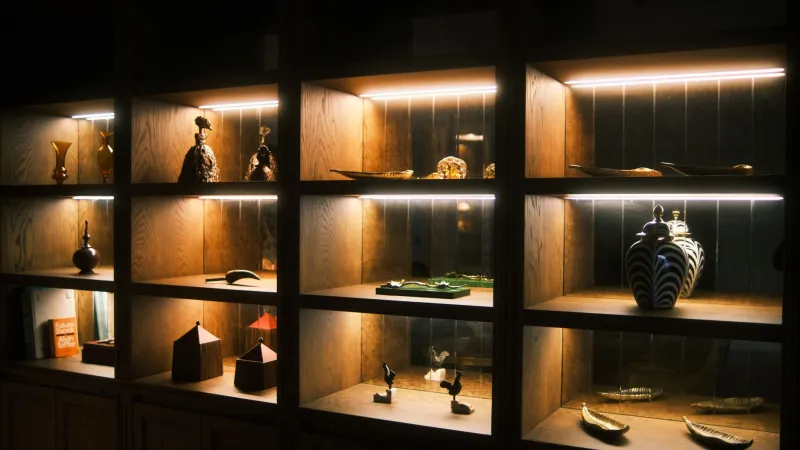
The collectors doing this at the highest level treat their setups like interior design projects. Detolf cabinets from IKEA remain a cult-favorite starting point — affordable, glass-enclosed, and endlessly modifiable. But serious collectors quickly graduate to custom-built acrylic risers, LED strip lighting with adjustable color temperature, and even motorized rotating bases that let a figure be viewed from every angle.
Jordan spent three weekends rewiring the lighting in her display room. "Warm white makes skin tones look incredible but washes out blues and purples. Cool white is the opposite. I ended up using adjustable strips so I can dial it in per shelf depending on what's displayed." Her setup, documented across her social media, has attracted a following of collectors who treat her posts less like fan content and more like practical tutorials.
Background elements matter too. Some collectors use printed dioramas or gradient backdrop panels — popular in Japanese hobby shops — to give figures context without cluttering the display. Others go minimalist, letting negative space and lighting do the heavy lifting.
The Secondary Market: Real Money, Real Stakes
Here's the part that tends to surprise people outside the hobby: this stuff appreciates. Not always, not predictably, but the secondary market for rare anime figures has produced some genuinely eye-popping returns.
Limited-run pieces tied to specific events — Wonder Festival exclusives, Aniplex lottery figures, manufacturer anniversary releases — often sell out within minutes of availability. On resale platforms like Mercari Japan (accessible to US buyers through proxy services), eBay, and domestic resellers, those same figures can double or triple in value within a year.
A 1/7 scale figure of a popular character from a currently airing series can spike dramatically if the show hits cultural momentum. Collectors who bought Makima figures before Chainsaw Man exploded in the West found themselves sitting on pieces worth significantly more than retail. It's speculative, sure — but no more so than limited sneaker drops or graded trading cards.
"I don't buy purely as investment," Marcus is quick to clarify. "But I'm not not thinking about it either." He laughs. "The pieces I love most also tend to be the ones that hold value. Good taste is a decent hedge."
Getting Started Without Getting Overwhelmed
For anyone looking to move beyond impulse convention purchases into intentional collecting, the community consensus is pretty consistent: start with characters you genuinely love, prioritize manufacturers with strong reputations, and buy from authorized retailers whenever possible.
Set a display budget alongside your figure budget — a beautiful piece deserves a beautiful home, and the lighting and shelving costs are real. Join a community early; the collective knowledge in spaces like r/AnimeFigures or MyFigureCollection is genuinely invaluable for spotting deals, avoiding fakes, and understanding what's worth chasing.
And don't underestimate photography. Many serious collectors have developed legitimate product photography skills to document their collections — a smartphone, a lightbox, and some patience can produce images that look like official press shots. It's a hobby within the hobby, and it's part of what makes this community so visually rich.
Marcus finishes adjusting his spotlight and steps back to look at his shelves. The figures catch the light in ways that make them look almost alive. "People spend thousands on art for their walls," he says. "This is just a different kind of art. It happens to also be characters I grew up with." He pauses. "And some of them are worth more than the art on those walls now, so."
Fair point, honestly.