Pull the Handle: Why Gashapon Capsule Toys Have America Completely Hooked
There's a specific kind of joy that hits the moment a plastic capsule clatters down a chute and lands in your waiting hand. You don't know what's inside. That's literally the whole point. And for a growing wave of American collectors, that two-second suspense is completely addictive.
Welcome to the world of gashapon — Japan's beloved capsule toy culture — which has quietly and then very loudly made its way into malls, anime conventions, TikTok feeds, and Amazon wishlists across the United States.
What Even Is Gashapon?
If you've ever dropped a quarter into a gumball machine and gotten a cheap plastic ring in return, you've experienced a distant, much less exciting cousin of gashapon. The Japanese version is something else entirely.
The word "gashapon" (sometimes written as "gachapon") is onomatopoeic — "gasha" for the cranking of the machine handle, "pon" for the capsule dropping out. These machines, which line entire dedicated floors of stores in places like Akihabara and Shinjuku, dispense tiny but remarkably detailed collectibles: miniature food replicas, anime characters frozen mid-pose, bizarrely realistic animals, retro game icons, and just about everything in between.
In Japan, gashapon culture has been going strong since the 1960s. Brands like Bandai and Takara Tomy Arts churn out hundreds of series every year, some so detailed and well-crafted that adult collectors display them like fine art. Prices typically run between 300 and 500 yen per pull — roughly $2 to $4 — which makes the hobby feel accessible even when you're chasing a full set.
How It Crossed the Pacific
For years, gashapon in America was strictly a niche pursuit. You'd find a machine or two wedged near the register at a Japantown import shop, or maybe spot a capsule or three at a convention dealer's table. Serious collectors imported blind boxes directly from Japan, navigating language barriers and international shipping fees just to get their hands on the latest Bandai drop.
Then a few things happened at once.
Unboxing content blew up on YouTube and TikTok. Mystery box culture — think Loot Crate, subscription boxes, and gaming loot drops — primed an entire generation to love the randomized reveal. And Japanese pop culture itself surged in mainstream American visibility, carried by the global dominance of anime, the continued reign of Nintendo, and the fashion influence of Harajuku aesthetics filtering into everyday US streetwear.
Suddenly, gashapon wasn't just for people who already had a foot in Japanese fandom. It was for anyone who liked the rush of not knowing.
The Mall Moment
One of the clearest signals that gashapon has arrived in America? Dedicated storefronts.
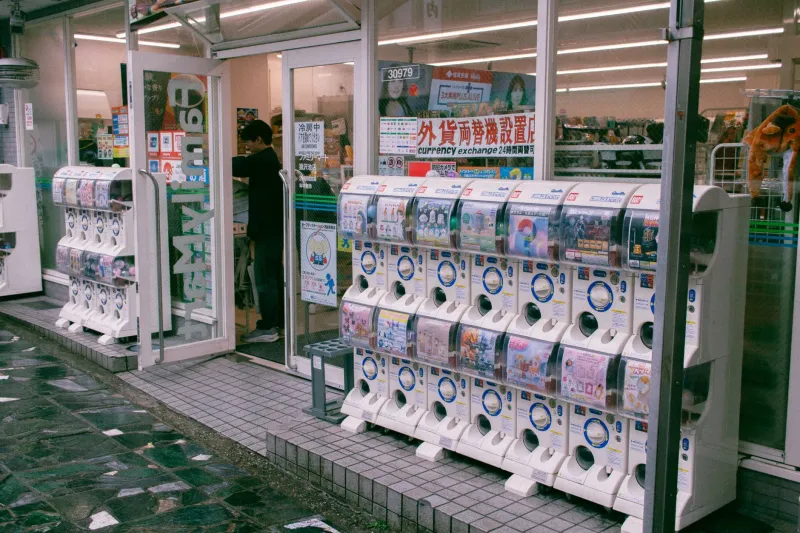
Retailers like Akihabara Station (with locations in California and Texas) and standalone gashapon kiosk setups have started popping up in US shopping malls, offering walls of machines stocked with Japanese imports. These aren't tucked-away novelties — they're destinations. On weekends, you'll find lines. You'll find parents pulling handles alongside their kids, and twenty-somethings spending an hour working through an entire series, hunting for the one rare variant that completes their set.
Amazon and specialty import sites like HLJ and AmiAmi have also made it dramatically easier to order specific gashapon series directly, either as full sets (bypassing the randomness, if that's your style) or as individual mystery pulls shipped from Japanese warehouses.
The Collectors Making It a Lifestyle
Talk to American gashapon collectors and you'll hear a consistent theme: it started with one pull and never really stopped.
Take Maya, a 28-year-old graphic designer based in Chicago who got into gashapon through a friend's TikTok. "I bought one Bandai Shokugan food miniature set — those tiny ramen bowls are absurdly realistic — and now I have a dedicated shelf," she laughs. "The randomness is part of it. You can't just buy the one you want. You have to earn it."
That earned feeling matters. In an era of instant digital gratification, there's something tactile and almost ritualistic about the gashapon experience. You hold the capsule. You crack it open. You either pump your fist or you start planning your next pull to try again.
For collectors like Derek, a 35-year-old in Atlanta who runs a small Instagram account dedicated to his hauls, the community aspect is just as compelling as the toys themselves. "There's a whole trading ecosystem," he explains. "You get a duplicate, you post it, someone else needs it, you swap. It's genuinely social in a way that a lot of collecting hobbies aren't."
The Series Everyone Is Chasing
Not all gashapon are created equal, and the American collector community has developed strong opinions about which series are worth hunting down.
Bandai's Shokugan food replica lines consistently rank at the top — the detail on a capsule-sized bowl of tonkotsu ramen or a miniature convenience store onigiri is genuinely jaw-dropping. Re-Ment, while technically a blind box brand rather than a traditional machine series, has a massive US following for its dollhouse-scale food and lifestyle scenes.
Anime-adjacent series tied to properties like Demon Slayer, Jujutsu Kaisen, and One Piece drive serious demand, with rare variants selling on eBay for multiples of their original pull price. And then there are the pure oddity series — gashapon depicting realistic cats in awkward positions, or disturbingly accurate miniature sushi — that go viral on social media and introduce new collectors to the hobby every time.
Why the "Blind Buy" Brain Is Real
Psychologists have a term for what makes randomized rewards so compelling: variable ratio reinforcement. It's the same mechanism that makes slot machines hard to walk away from and loot boxes in video games so controversial. The unpredictability of the reward actually makes the dopamine hit stronger than if you knew exactly what you were getting.
Gashapon taps directly into that wiring — but with a key difference from its digital counterparts. You end up with something physical. Something you can hold, display, trade, or gift. The stakes feel low enough to stay fun, and the craftsmanship of the best series means even the "common" pulls are genuinely satisfying objects.
For a generation that grew up opening Pokémon card packs and grinding for rare drops in video games, gashapon feels like a natural extension of something already deeply familiar — just with a more aesthetic, Japanese design sensibility layered on top.
Where to Start If You're Curious
If this whole thing sounds appealing and you don't happen to live near a dedicated gashapon retailer, don't stress. Amazon carries a wide range of complete sets from brands like Bandai and Re-Ment. AmiAmi and HLJ are go-to import sites for serious collectors. And if you want the full machine experience, check whether your nearest Japantown, anime convention, or Asian mall has machines set up — the in-person pull is a genuinely different (and better) experience than ordering online.
Start with a food miniature series if you want something universally crowd-pleasing. Go anime character if you have a specific fandom. And whatever you do, don't open just one.
You've been warned.