Algorithm Approved: The Gen Z Creators Turning Japanese Aesthetic Obsessions Into Real Businesses
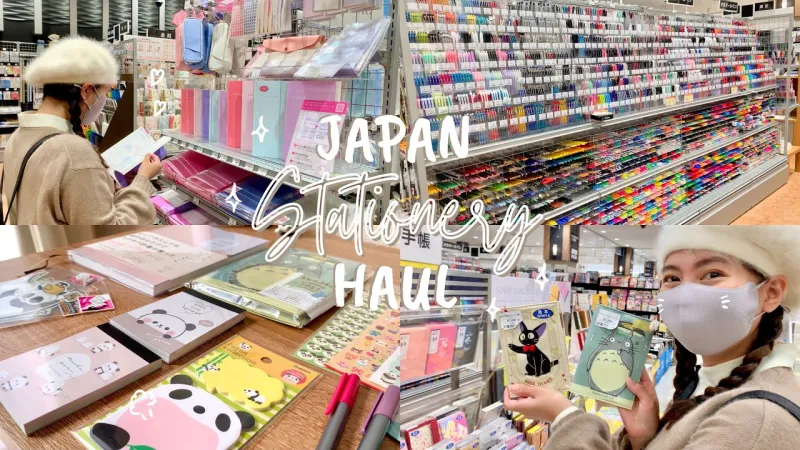
Photo: young woman unboxing Japanese stationery products on desk with aesthetic flat lay, via i.ytimg.com
Somewhere between a Tokyo stationery haul and a midnight Loft unboxing, TikTok figured out that Japanese aesthetics are basically catnip for the algorithm. Soft color palettes, satisfying organizational systems, kawaii packaging, and the kind of visual coherence that makes a smartphone screen look like a mood board — it all performs. And a growing wave of American creators noticed before the brands did.
They didn't start with business plans. Most of them started with a camera, a bedroom, and a package from Rakuten.
The Haul Video as Origin Story
Ask almost any creator in this space how it started and you'll get a version of the same answer: they were already buying the stuff, so they figured they'd film it. Mika Chen, a 22-year-old based in Portland, Oregon, posted her first Japanese stationery unboxing in late 2021 mostly because she had nothing else to do. "I spent like forty bucks on Hobonichi planners and Midori tape and I just... wanted to show someone," she says. "I didn't think it would go anywhere."
That video hit 200,000 views in a week. Two years later, her channel sits at 1.4 million followers and she's worked with three Japanese stationery brands on exclusive US-facing product drops.
Her story isn't unusual anymore. Across TikTok and Instagram Reels, a whole ecosystem of creators has built audiences — and businesses — around Japanese visual culture. The categories are wide: stationery, skincare, fashion, food, room aesthetics, manga, anime merchandise. But the common thread is a consistent, recognizable visual language that happens to translate extraordinarily well to short-form content.
Why Japanese Aesthetics Hit Different on the Algorithm
There's a reason these videos keep landing on For You pages. Japanese design culture, broadly speaking, tends toward intentionality. Whether it's the minimalism of a Muji shelf or the maximalist-but-organized chaos of a Harajuku outfit, there's a coherence to it that reads as satisfying on screen. And satisfaction is basically the unit of currency on TikTok.
Jordan Park, a content strategist who works with several mid-tier lifestyle creators, puts it plainly: "Japanese aesthetic content has an incredibly high completion rate. People watch the whole video. The algorithm rewards that more than almost anything else." He points to the tactile quality of a lot of the content — the sound of peeling washi tape, the visual rhythm of a planner spread, the color story of a skincare flat lay — as reasons why watch time stays high even without dramatic hooks or jump cuts.
There's also the novelty-familiarity balance. Japanese products feel discoverable, slightly exotic, but approachable enough that American audiences don't feel locked out. "It's aspirational without being alienating," Park says. "That's a very hard thing to achieve."
From Audience to Empire
The smart creators figured out early that views alone weren't the endgame. The ones who've turned this into real income did it by moving beyond affiliate links and AdSense into actual brand infrastructure.
Danika Ross, 24, from Austin, built her following around what she calls "Japanese-inspired slow living" — a content niche that blends aesthetic minimalism, journaling culture, and imported goods. She now runs her own digital shop selling Notion templates and printable planner inserts styled after Japanese stationery design. It generated over $180,000 in revenue last year. "I never positioned it as 'Japanese products,' exactly," she explains. "I positioned it as a feeling. The products just help you get there."
That framing matters. The most successful creators in this space aren't simply resellers or haul accounts — they're translators. They take a visual and cultural sensibility that originates in Japan and make it legible, accessible, and shoppable for an American audience that's genuinely hungry for it.
Others have gone further, co-developing actual physical products. Several US-based creators with followings in the 500K-plus range have collaborated directly with Japanese stationery and lifestyle brands on limited-edition collections specifically designed for the American market. The brands get distribution and cultural credibility; the creators get product equity and a story their audience wants to buy.
The Authenticity Question
It's not all clean aesthetics and conversion rates. Some corners of the internet have pushed back on creators who profit heavily from Japanese culture without much connection to it beyond consumption. The criticism is usually gentler than full-on gatekeeping — more of a raised eyebrow than a takedown — but it's there.
Most creators in this space have developed their own answer to it. Mika Chen, who is of Chinese-American heritage, is thoughtful about the distinction between appreciation and appropriation. "I try to actually learn about the things I'm sharing. Not just the product, but where it comes from, what it means," she says. "And I credit Japanese designers and brands explicitly. I'm not pretending I invented any of this."
Danika Ross, who is Black and grew up in Texas with zero direct connection to Japanese culture, has had more pointed conversations with her audience about this. "Some people think because I'm not Japanese I shouldn't be building a brand around this aesthetic. But I got into it because I genuinely love it. I think that comes through."
The consensus among creators seems to be that transparency and education make the difference — talking about origins, supporting actual Japanese brands, and not flattening a rich culture into a pure aesthetic commodity.
What Comes Next
The next phase of this creator economy looks less like individual influencers and more like actual media companies. Several of the bigger names in the Japanese aesthetic content space are quietly building teams, launching newsletters, and exploring physical retail pop-ups. The bedroom-to-brand pipeline is getting shorter and more deliberate.
For brands on the Japanese side, the opportunity is obvious. American creators have essentially done the market research and audience development for free. The smart ones are already reaching out.
And for the creators themselves? The aesthetic that started as a personal obsession has become, in many cases, the most valuable thing they own. Not bad for a washi tape haul.