Beyond the Gimmick: The Anime-Inspired Fusion Dishes That Are Actually Earning a Permanent Spot on American Menus
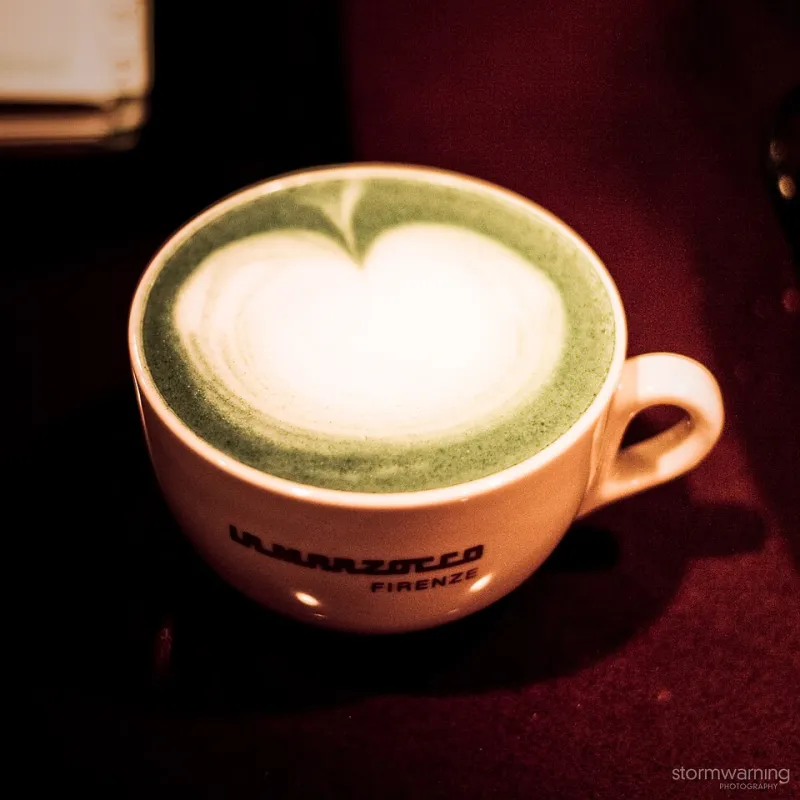
Photo: Jeff Nelson, CC BY-SA 2.0, via Wikimedia Commons
Let's pour one out for the sushi burrito. It had a moment. It had a lot of moments, actually — a whole era of Instagram posts, food truck lineups, and breathless blog coverage announcing that this was the future of Japanese-American eating. Then it kind of... became a Poke Bowl and disappeared.
Fusion food has a credibility problem, and a lot of it is self-inflicted. When the concept is the whole point, when the dish exists primarily to be photographed or to land a punchline, it tends not to survive contact with actual hunger. But the conversation around Japanese-American food fusion is bigger and more interesting than its gimmickiest examples, and right now, in 2025, there are dishes and concepts that are genuinely earning their place — not because they're clever, but because they're good.
The Matcha Mainstreaming Nobody Predicted
Start with the obvious win. Matcha has completed one of the most successful ingredient crossovers in recent American food history. A decade ago it was a niche café order for people who'd spent time in Kyoto or watched too much NHK World. Today it's at Starbucks, it's in Trader Joe's baked goods, it's in protein bars and ice cream and, yes, approximately ten thousand TikTok latte recipes.
The interesting thing about matcha's success isn't the flavor — it's the framing. Matcha didn't go mainstream as a Japanese thing, exactly. It went mainstream as a wellness thing, a color thing, an aesthetic thing. The cultural origin was part of the appeal, but it wasn't a barrier. American consumers folded it into their existing routines without feeling like they needed permission.
Chefs and food industry analysts point to this as a model for what works in Japanese-American fusion: when the flavor is genuinely compelling and the cultural context is respected rather than erased, things tend to stick.
What's Actually Working Right Now
Beyond matcha, a few specific dishes and formats are showing real staying power.
Okonomiyaki-adjacent savory pancakes have been quietly gaining ground in cities with strong food culture — Los Angeles, Portland, Chicago, New York. They're not always called okonomiyaki; sometimes they show up as "Japanese-style savory pancakes" or get folded into brunch menus with locally-sourced toppings. Chef Tomás Delgado, who runs a Japanese-Mexican brunch spot in East Los Angeles, started offering a version with chorizo and cotija about two years ago. "People had no idea what okonomiyaki was," he says. "But they understood 'savory pancake with crispy edges and a sauce that tastes like it has secrets.' It sells out every weekend."
Japanese-style sandwiches — the pillowy milk bread, the precisely layered katsu, the egg salad that somehow tastes completely different from American egg salad — have crossed over hard. Konbini-style sandwich shops have opened in at least a dozen major American cities in the last three years, and the format has influenced a wider range of cafés that have adopted the aesthetic and the texture philosophy without necessarily calling it Japanese. The shokupan (Japanese milk bread) moment, in particular, feels like it has real runway left.
Mochi-based desserts in non-traditional formats are another genuine success story. Mochi ice cream has been mainstream for years, but the current wave goes further: mochi donuts, mochi waffles, mochi-stuffed pastries at Korean-American and Japanese-American bakeries. The texture is doing the work — chewy, yielding, satisfying in a way that feels novel without being alienating.
The Flops Worth Learning From
For every matcha latte, there's a ramen burger. Remember those? The bun made of compressed ramen noodles, the burger inside, the queue around the block at Smorgasburg? It was a genuinely interesting idea, and then it was a punchline, and now it's a cautionary tale about novelty half-life.
The pattern with fusion failures is usually the same: the concept is front-loaded and the eating experience is an afterthought. Sushi pizza, sushi burritos, ramen burgers — they all prioritized the visual joke over the question of whether the dish actually tasted better than its component parts eaten separately.
Chef Yuki Tanaka, who consults for restaurant groups in the Pacific Northwest, puts it bluntly: "The question I always ask is, does this dish need to exist? Not 'is it interesting' — does it actually solve a flavor problem? Is it better than either thing alone?" By that standard, a lot of fusion concepts fail before the first bite.
The Anime Connection
It would be lazy to say that anime is driving Japanese food's American moment, but it's not nothing either. The generation of Americans now in their twenties and early thirties grew up watching food scenes in Studio Ghibli films and anime series that made Japanese cooking look like the most beautiful, meaningful thing a person could do. The cultural priming is real.
Food content creators on TikTok and YouTube regularly use anime aesthetics to frame Japanese cooking videos, and the crossover audience — people who came for the anime and stayed for the katsu curry recipe — is significant. Several new Japanese-American restaurant concepts have leaned into this explicitly, with décor and branding that nods to anime visual culture while serving genuinely good food.
What's Coming Next
A few things are worth watching. Japanese convenience store food — the onigiri, the egg salad sandwich, the melon bread — is having a slow-burn moment that feels like it's about to accelerate. Several US concepts are explicitly building around the konbini aesthetic, and as more Americans travel to Japan and experience the real thing, the demand for quality domestic versions is only going up.
Tamago sando (egg salad sandwiches on milk bread) in particular seems poised for a mainstream breakout. It's already a darling of the food internet. The infrastructure — specialty bakeries making proper shokupan, chefs who understand the proportions — is finally catching up to the demand.
Karaage is another one. Japanese fried chicken has been a known quantity in food-obsessed circles for a while, but it hasn't had its Nashville Hot moment yet. Given how thoroughly Americans have embraced fried chicken in every other cultural register, it feels like a matter of time.
The fusion dishes that will last are the ones that stop trying to be clever and start trying to be delicious. The good news is there are more of those every year.