Sunset Grooves: The Japanese Music From the 80s That America Can't Stop Playing
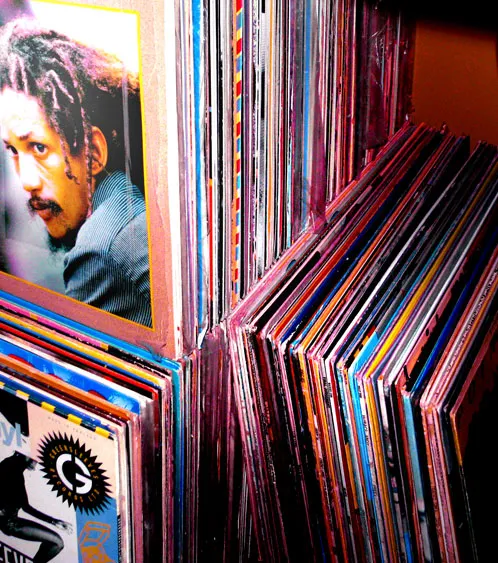
Photo: dubdem sound system, CC BY 2.0, via Wikimedia Commons
It might start with a YouTube thumbnail — a soft-focus image of a Japanese cityscape at dusk, or an illustrated woman in a convertible, neon reflections pooling on wet asphalt. You click. Forty-five minutes later, you've discovered Mariya Takeuchi, Tatsuro Yamashita, and Miki Matsubara, and something about the world feels a little more cinematic than it did before.
This is how a lot of Americans are falling for City Pop in 2025, and it's happening at a scale that nobody in the late-80s Tokyo recording studios could have imagined.
What Is City Pop, Exactly?
City Pop is a loosely defined genre that emerged from Japan's urban music scene in the late 1970s and peaked commercially through the 1980s. It drew heavily from American funk, R&B, soft rock, and yacht rock — then filtered those influences through Japanese production sensibilities to create something distinctly its own: lush, layered, melodically sophisticated, and drenched in a particular kind of optimism that matched Japan's economic boom years.
Think warm basslines, shimmering synthesizers, and vocal performances that feel simultaneously intimate and cinematic. It's music that sounds like a memory of a city you've never visited.
Artists like Mariya Takeuchi, Anri, Tatsuro Yamashita, and Miki Matsubara defined the genre's commercial peak. Their albums sold millions in Japan but remained almost entirely unknown in the West — until the algorithm changed everything.
The Moment Everything Shifted
The modern Western discovery of City Pop has a fairly traceable origin point. In 2017, Mariya Takeuchi's 1984 track Plastic Love began circulating on YouTube in an unofficial upload that paired the song with a striking promotional photo. The algorithm — still somewhat mysterious in its logic — began recommending it to listeners of adjacent genres. The video accumulated tens of millions of views before being taken down and re-uploaded multiple times, each cycle expanding its audience further.
By 2019, City Pop had its own dedicated subreddits, YouTube channels, and Spotify playlists. By 2021, TikTok had accelerated the spread dramatically, with creators using City Pop tracks as background music for aesthetic video content — lo-fi study sessions, night drives, "living in an 80s anime" visual essays.
Spotify's internal data has reflected this consistently. Tracks tagged under City Pop have seen year-over-year streaming growth in the US throughout the early 2020s, with 2024 and 2025 representing peak engagement. Playlists curated around the genre — both official and user-generated — collectively pull hundreds of millions of streams annually from American listeners alone.
Who's Actually Listening?
The American City Pop audience is broader than you might expect. Yes, there's significant overlap with anime fandom and Japanese pop culture enthusiasts. But the genre has also found devoted listeners among people with no particular connection to Japan at all.
"I got into it through a lo-fi study playlist, honestly," says Derek Williams, a 31-year-old graphic designer in Austin. "I had no idea it was Japanese at first. I just knew it made me feel calm and focused. Then I started looking up the artists and fell completely down the rabbit hole."
Derek now runs a small Instagram account dedicated to City Pop recommendations and has assembled a vinyl collection that includes several original Japanese pressings sourced through eBay and Discogs. He's not alone in that physical media devotion — the City Pop boom has driven significant demand for original Japanese vinyl, with rare records by artists like Anri or Toshiki Kadomatsu selling for hundreds of dollars on the collector market.
For others, the appeal is more explicitly nostalgic — not personal nostalgia, since most American listeners weren't alive during City Pop's original run, but something more like aesthetic nostalgia. A longing for an era that feels warmer, more analog, less saturated with information.
"It's the sound of a future that never happened," says Priya Nair, a music blogger in Los Angeles who covers Japanese genres for several independent music sites. "Japan in the 80s had this incredible economic confidence that produced this incredibly optimistic music. Listening to it now feels almost bittersweet. That's part of the appeal."
The Vaporwave Connection (and the Divergence)
City Pop's Western resurgence didn't happen in isolation. The genre has a complicated, generative relationship with Vaporwave — the internet-born micro-genre that emerged around 2010-2012 and built much of its sonic identity by sampling and distorting 80s Japanese music, elevator muzak, and early digital audio.
Vaporwave introduced an entire generation of online listeners to the texture of Japanese 80s production — the particular reverb on a Yamaha DX7, the shimmer of a Roland Juno-106 — before many of them even knew what City Pop was. When the original source material became accessible through streaming, those listeners recognized something familiar.
But City Pop has since grown well beyond the Vaporwave audience. Its current mainstream adjacency owes more to lo-fi hip-hop channels, aesthetic YouTube content, and TikTok's visual culture than to any particular music subculture.
What Western Producers Are Taking Notes On
The influence of City Pop and 80s J-Pop is increasingly audible in Western production. Producers working in indie pop, R&B, and even mainstream pop have cited Japanese 80s techniques as direct influences — particularly the genre's approach to chord progressions (often more harmonically complex than Western pop of the same era), its layered vocal arrangements, and its willingness to let a track breathe.
Several American artists have incorporated City Pop elements explicitly into recent releases, and the "Japanese 80s aesthetic" has become a recognizable reference point in production conversations that would have been unimaginable even five years ago.
The Vinyl Factor
No discussion of City Pop's American moment is complete without acknowledging the vinyl revival's role. As record collecting has surged among younger American consumers, Japanese pressings have become increasingly sought-after — valued for their manufacturing quality as much as their musical content.
This has created a secondary market dynamic where City Pop discovery and vinyl collecting reinforce each other. Someone streams Plastic Love on Spotify, falls in love with the genre, starts hunting for physical copies, discovers the broader world of Japanese pressing culture, and suddenly has a hobby that expands well beyond music.
Record stores in cities with significant Japanese-American communities — Los Angeles, Seattle, New York — have reported consistent demand for Japanese 80s titles, and online marketplaces have seen price appreciation across the catalog.
A Genre Finding Its Forever Home
City Pop's American moment raises an interesting question: is this a trend, or is it a permanent expansion of the genre's audience? The evidence leans toward the latter. Unlike many algorithm-driven discovery cycles that peak and fade, City Pop has shown unusual staying power — continuing to grow its listener base rather than plateauing.
For the artists involved, many of whom are now in their 60s and 70s, the Western rediscovery has been genuinely moving. Mariya Takeuchi has spoken publicly about her surprise at becoming beloved by listeners who weren't born when Plastic Love was recorded. Tatsuro Yamashita has seen renewed international interest in a catalog that spans decades.
For American listeners, the appeal is simpler: it's just really, really good music. And sometimes that's enough.