Who Really Owns the Culture? The Fan Wars Tearing the Anime Community Apart
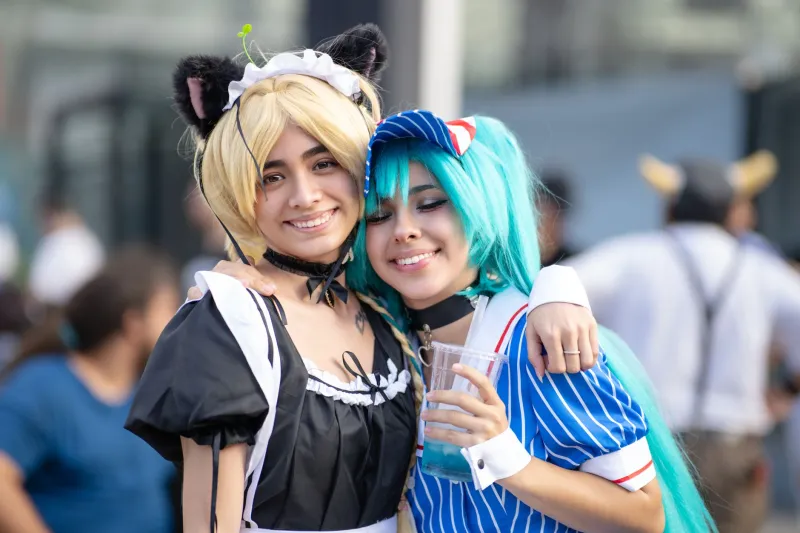
Let's get something out of the way up front: gatekeeping is not a new phenomenon. Every subculture that goes mainstream eventually produces a faction of people who were there before it was cool and would very much like you to know that. Punk fans did it. Hip-hop did it. Craft beer did it. And now anime fandom — one of the fastest-growing entertainment communities in the United States — is doing it in ways that are getting increasingly loud, increasingly personal, and increasingly weird.
The question worth asking isn't whether gatekeeping exists in anime fandom. It obviously does. The more interesting question is what's actually driving it, what it's costing the community, and whether any of the arguments being made in its defense hold up under scrutiny.
The Boom Nobody Fully Anticipated
To understand the tension, you have to understand the scale of what's happened to anime fandom in America over the past decade. We're not talking about incremental growth. We're talking about a structural transformation.
Anime used to require effort. You found fansubs through specific forums, you imported physical media, you knew which late-night cable blocks to stay up for. The friction was real, and it naturally filtered the audience toward people who were genuinely committed. That shared investment created tight community bonds — and, yes, a certain sense of exclusivity that some members found meaningful.
Then Crunchyroll went mainstream. Then Netflix started funding original anime productions. Then Demon Slayer broke box office records in the US. Then Jujutsu Kaisen became a TikTok phenomenon. The friction evaporated almost overnight, and with it went the natural barrier that had kept fandom relatively contained.
The result is an audience that includes everyone from people who've watched every Satoshi Kon film multiple times to people who just discovered anime last month because an algorithm served them a clip. Both groups are now sharing the same spaces — conventions, subreddits, Discord servers, Twitter threads — and they do not always get along.
The Gatekeeping Playbook
The tactics used to police fandom membership are remarkably consistent across communities, and anime is no exception. The most common is the knowledge test: demanding that someone demonstrate familiarity with obscure titles, production history, or specific trivia before their enthusiasm is considered legitimate. "Oh, you like Attack on Titan? Have you even seen Neon Genesis Evangelion?" is a sentence that has been said, sincerely, more times than anyone should be comfortable with.
Language fluency requirements are another flashpoint. There's a genuine debate — not entirely without merit — about whether consuming Japanese media exclusively in English creates a filtered experience that misses nuance. But that debate has a tendency to slide from "here's an interesting consideration" into "you're not a real fan if you watch dubs and can't read kanji," which is a very different thing.
Then there's the "fake fan" accusation, which is perhaps the most contentious category. The implicit claim is that some people's interest in anime is performative — driven by aesthetics or social cachet rather than genuine love of the medium. This argument gets wielded most aggressively against women, against people of color, and against anyone who came to fandom through mainstream entry points rather than the underground channels the accuser considers legitimate.
The irony is that "fake fan" accusations say more about the accuser's need for status than anything meaningful about the accused's relationship with the art.
What the Old Guard Gets Right
Here's where I'm going to push back on my own argument a little, because intellectual honesty requires it: some of the frustration longtime fans feel is understandable, even if the way it gets expressed is often ugly.
When a subculture goes mainstream, things genuinely change. Community spaces that were built around shared depth of knowledge get overwhelmed by volume. Conversations that used to assume a certain baseline familiarity now have to start from scratch constantly. Events that were once manageable become logistical nightmares. The intimacy that made those early communities feel special is harder to maintain at scale.
There's also a legitimate concern about surface-level engagement producing surface-level culture. When a fashion aesthetic or a meme format gets stripped from its original context and circulated without any understanding of where it came from, something is lost. The worry that mainstream adoption flattens and distorts is not paranoia — it's a pattern with historical precedent.
But — and this is the critical part — none of that justifies making individual people feel unwelcome for being new. Those are structural problems that require structural responses, not personal hostility directed at whoever is standing in front of you at a convention.
What the New Fans Deserve
Casual fans are not the enemy of the culture. They are, in most measurable ways, its current engine.
The explosion of mainstream anime interest has funded better productions, created more licensing opportunities, and brought Japanese creative work to audiences that would never have found it otherwise. The person who watched My Hero Academia because it showed up on their Netflix homepage and then became obsessed enough to learn Japanese and start tracking down obscure shonen titles from the '90s? That pipeline exists because mainstream entry points exist. Gatekeeping doesn't protect culture — it just makes the on-ramp harder to find.
There's also something genuinely patronizing about the assumption that new fans can't develop depth over time. Everyone who is now a knowledgeable, passionate fan of Japanese pop culture was once a beginner. The question is whether the community they encounter when they arrive makes them want to go deeper or makes them feel like they'll never belong.
The Real Stakes
This isn't just an internal fandom drama, though it's easy to dismiss it as one. The culture of a fan community shapes what gets made, what gets licensed, and what gets preserved. If the loudest voices in anime fandom are dedicated to making new fans feel unwelcome, the long-term effect is a community that ages in place and loses the cultural momentum it's currently riding.
The alternative — a community that welcomes people at whatever level of engagement they're at and trusts that genuine enthusiasm finds its own depth — is messier. It means sharing spaces with people who mispronounce character names and haven't seen the classics and only know the mainstream titles. It means accepting that the community you were part of is not the same community it used to be.
That's a real loss. It's also, genuinely, the price of success. And most subcultures would kill for that problem.