Private Stage: The Americans Turning Spare Rooms Into Japanese Karaoke Boxes—and Never Going Back
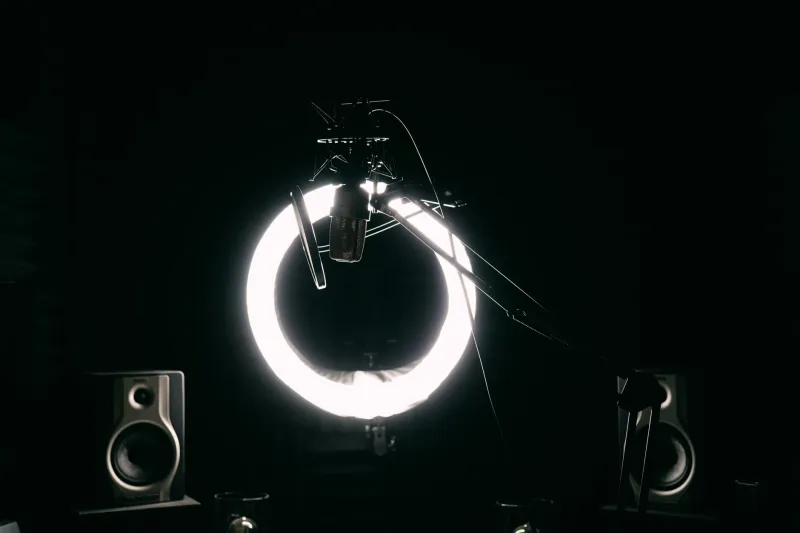
The first thing you notice when you walk into Kevin and Priscilla Torres's finished basement in Naperville, Illinois is the lighting. Deep red and violet, tunable, projected from strips mounted along the ceiling perimeter. Then you notice the acoustic panels on the walls—wrapped in dark fabric, arranged in a pattern that's somehow both functional and stylish. Then the monitor. Then the microphone stand. Then the tambourine on a hook by the door, which, Priscilla explains, is "not optional."
This is their karaoke box. They built it themselves over eight months. It holds twelve people comfortably, has a song catalog of over 90,000 tracks—roughly 40% of which are Japanese—and has become, by their own accounting, the most-used room in the house.
"We used to spend probably three hundred dollars every time we went out to karaoke," Kevin says. "Between the room rental, the drinks, the food, the Ubers. Now we just... come downstairs."
The Box, Explained
If you've never been to Japan—or to one of the Japanese-style karaoke establishments that have slowly colonized American cities over the past decade—the concept of the karaoke box might need a little unpacking. Unlike the American bar karaoke experience, where you perform for a room full of strangers while someone nurses a beer in the corner, Japanese karaoke boxes are private rooms rented by the hour. Your group, your songs, your vibe. The room is yours.
This privacy is kind of the whole point. Japanese karaoke culture isn't about performance for an audience. It's about enjoyment, release, connection with your specific group of people. You can be terrible. You can be incredible. You can do the same Hikaru Utada song four times in a row. Nobody outside the room will know.
Americans who've experienced this format—either in Japan or at the growing number of US establishments offering it—tend to have a specific reaction: why don't we do it this way everywhere?
Some of them have decided to just build their own.
The Build
The DIY home karaoke box community is still relatively small but surprisingly organized. Facebook groups, Reddit threads (r/homekaraoke has seen consistent growth), and dedicated YouTube channels walk builders through every stage of the process, from room selection and acoustic treatment to software setup and song catalog management.
The technical components break down into a few core categories. Sound isolation is the big one—nobody wants to hear Don't Stop Believin' from three rooms away at 11pm. Builders typically use a combination of mass-loaded vinyl (a heavy, flexible barrier material), resilient channel mounting for drywall, and acoustic panels to manage both sound leakage and room echo. A decent acoustic treatment setup can run anywhere from $500 to several thousand dollars depending on room size and how serious the builder wants to get.
The karaoke system itself is usually built around one of a handful of dedicated platforms. Karafun, KaraokeCloud, and the hardware-based units from brands like BMB and Vocopro are popular choices, but the most enthusiastic builders tend to migrate toward setups that support Japanese song databases—specifically platforms that integrate with the vast catalogs maintained by companies like Joysound and DAM, the two dominant karaoke providers in Japan.
"Getting access to Japanese catalogs was the whole reason I did this," says Amanda Chu, a 31-year-old in Atlanta who converted her spare bedroom last year. "I grew up listening to J-pop with my mom. The American karaoke bars near me had maybe two hundred Japanese songs. I wanted everything."
Amanda's room now has access to over 80,000 Japanese tracks through a combination of subscription services and a self-maintained library of KFN files (the karaoke equivalent of an MP3). She can do deep cuts from Morning Musume's early discography, obscure City Pop tracks, current releases from artists her American friends have never heard of.
"My friends who don't know any Japanese come over and they just pick songs by the artwork," she says. "Half the time they end up loving something they'd never have found otherwise."
The Aesthetic Question
Beyond the tech, the most interesting part of the home karaoke box trend is what people are doing with the design. A plain room with a monitor and a microphone is functional. But the builders who are really into this are going full karaoke box aesthetic—and that means drawing heavily from Japanese interior design sensibilities.
Dark, moody lighting is almost universal. So is some form of banquette or bench seating along the walls, a nod to the low-slung couches found in actual Japanese karaoke establishments. Neon signage—either actual neon or LED approximations—is popular, often featuring Japanese characters, music-related imagery, or inside jokes rendered in katakana. Several builders have incorporated shoji-style sliding panels as room dividers, or used traditional Japanese patterns in their acoustic panel fabric choices.
"I wanted it to feel like you stepped into a Shinjuku side street," says Kevin Torres. "Not a copy, but the feeling of it. That energy."
The result in their basement is genuinely convincing—not a theme park recreation but a space that has absorbed the atmosphere of Japanese karaoke culture and translated it into something that fits a suburban Illinois home.
Status Symbol or Social Infrastructure?
There's an argument that the home karaoke box is becoming a new kind of status symbol in certain American social circles—the entertainment-room equivalent of a home theater or a built-out home bar. And that's probably true. These builds aren't cheap. A serious setup can run $5,000 to $20,000 or more depending on how deep the rabbit hole goes.
But the people doing it push back on the status framing, at least as the primary motivation. What they describe more often is a genuine shift in how they socialize. The karaoke box becomes the reason people come over. It becomes the thing their friend group organizes around. It creates a specific kind of togetherness—low-pressure, joyful, a little ridiculous—that's hard to replicate at a bar.
"We've had people come over who've never sung karaoke in their lives," says Priscilla Torres. "They're terrified. Then they do one song and you can't get the microphone away from them."
Amanda Chu puts it more simply: "People stay later. They open up more. There's something about singing badly in front of your friends that just breaks everything open."
That, more than the acoustic panels or the Japanese song catalog or the tunable lighting, might be the real reason this trend is growing. The technology is impressive. The design is fun. But what people are actually building, at the end of the day, is a room where it's safe to be a little bit ridiculous.
Japan figured that out decades ago. America is catching up, one converted spare room at a time.